

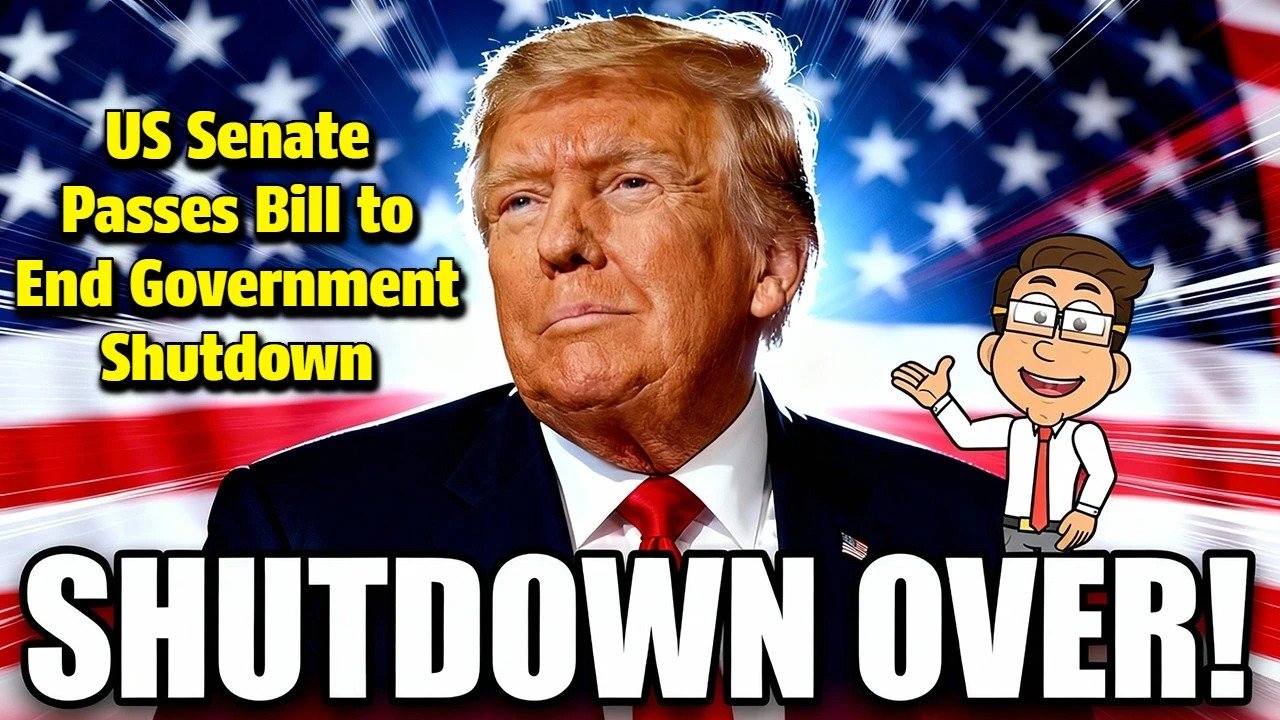
After a record-breaking 43-day standoff — the longest in U.S. history — Congress finally acted to reopen the federal government. On November 10, 2025, the Senate passed a bipartisan funding bill, followed by House approval and President Trump’s signature on November 12. Millions affected by disrupted services, including delayed SNAP benefits, can now expect relief as agencies restart operations.
Why Did the 2025 Government Shutdown Happen?
The shutdown began on October 1, 2025, when fiscal year 2026 funding lapsed amid bitter disputes over extending Affordable Care Act (ACA) health insurance subsidies set to expire at year-end.

Key triggers:
- Democrats demanded subsidy extensions to prevent premium spikes for over 20 million Americans.
- Republicans refused to include them in short-term funding, prioritizing reopening without concessions.
- Senate Democrats blocked multiple Republican-led continuing resolutions.
The impasse affected 3 million federal workers (missed paychecks, furloughs) and halted or reduced programs like SNAP food assistance.
Timeline of the Longest US Government Shutdown
| Event | Date | Details |
|---|---|---|
| Shutdown begins | October 1, 2025 | Funding lapses; non-essential operations halt |
| Record for longest shutdown broken | ~October 22, 2025 | Surpasses 2018-2019’s 35 days |
| Bipartisan deal reached | November 9-10, 2025 | Moderate Democrats join Republicans |
| Senate passes bill (60-40) | November 10, 2025 | 8 Democrats provide key votes |
| House passes bill (222-209) | November 12, 2025 | Mostly party-line |
| President Trump signs | November 12, 2025 | Government reopens immediately |
| Funding secured until | January 30, 2026 | Temporary stopgap measure |
What the Funding Bill Includes
This short-term continuing resolution (CR) restores operations without resolving the ACA dispute:
- Full back pay for federal workers.
- Reversal of any layoffs during the shutdown.
- Protection for essential programs like SNAP, WIC, and VA services.
- Ban on further federal workforce reductions until January 30.
- Extra security funding for Congress, judges, and Supreme Court.
- Promise of a December vote on ACA subsidy extensions (no guarantee of passage).

Notably, health subsidy extensions were excluded — a major Democratic goal left for future fights.
Impacts and What Changes Now
The shutdown caused widespread hardship:
- Delayed or partial SNAP benefits for 42 million recipients.
- Flight disruptions and airport delays.
- Closed national parks, museums, and services.
- Economic data gaps affecting markets.
With the bill signed:
- Agencies are reopening; most workers return immediately.
- Back pay processing begins (expect deposits soon).
- SNAP November benefits are being fully restored — states are loading remaining amounts to EBT cards.
- Normal operations resume, though some backlogs (e.g., passports, permits) may linger.
FAQs About the 2025 Government Shutdown Ending

Is the government shutdown over as of November 18, 2025?
Yes — it officially ended on November 12 when President Trump signed the bill.
Will federal workers get back pay?
Absolutely. The law guarantees full retroactive pay for furloughed and essential workers.
What about missed SNAP/food stamp benefits?
Full November benefits are being issued retroactively. Check your EBT balance or state portal for updates.
Could another shutdown happen soon?
Possible — funding only lasts until January 30, 2026. Unresolved ACA debates could trigger a repeat.
Did Democrats achieve their health subsidy goal?
No, extensions were not included, though a vote is promised in December.
The 2025 shutdown exposed deep divisions but also the real pain of gridlock on everyday Americans. With temporary funding in place, pressure is now on Congress to pass a full-year budget and address expiring ACA subsidies before the next deadline. Stay updated via official sources like USDA.gov or your state’s agencies, and contact your representatives to push for lasting solutions. Relief is here — but stability isn’t guaranteed yet. (658 words)